For three years, my face told a story I hadn’t consented to.
Cystic acne along the jawline. Bloating so pronounced I’d unbutton my trousers at dinner tables when no one was looking. A brain fog thick enough that I’d reread the same paragraph four times and still not absorb it.
I did what most people do. I blamed my skincare. I cycled through retinols, benzoyl peroxide, and a $90 serum a dermatologist swore by. I cut dairy. I cut gluten. I cut everything enjoyable. Nothing worked.
Then, in January of this year, I came across a 2023 review in Frontiers in Immunology examining what researchers now call the gut-skin axis — a bidirectional communication pathway between the gastrointestinal microbiome and the epidermis. The paper argued something quietly radical: in some patients, particularly women with hormonal-pattern acne, the root cause resides not in the skin at all, but in intestinal permeability. Leaky gut, in the vernacular. A condition where the tight junctions of the intestinal lining loosen, allowing bacterial metabolites, undigested food particles, and endotoxins into systemic circulation. The skin, being the body’s largest organ of elimination, becomes the visible fallout.
The hypothesis was compelling. But the literature, I found, was divided. Gastroenterologists in clinical settings were increasingly comfortable with the concept. Dermatologists, by and large, were not. The American Academy of Dermatology has issued no formal position on the gut-skin axis. The studies exist — many of them — but they’re scattered across immunology, microbiology, and nutritional science journals. No single discipline owns the conversation yet.
This is the gap where most wellness influencers rush in with miracle protocols and unsubstantiated supplement stacks. I wanted something different: a protocol built on the specific studies, with measurable outcomes, conducted transparently.
So I designed a six-week self-experiment.
What follows is not medical advice. It’s a personal account of what happened when I applied the published research — and only the published research — to my own case. I tracked everything: skin photographs every three days, a symptom journal, stool consistency (Bristol scale, if you must know), energy levels, and the subjective fog index I’d been measuring myself against for years.
The Protocol: Three Interventions
The protocol included three interventions, each tied to a specific peer-reviewed finding:
1. L-Glutamine Supplementation
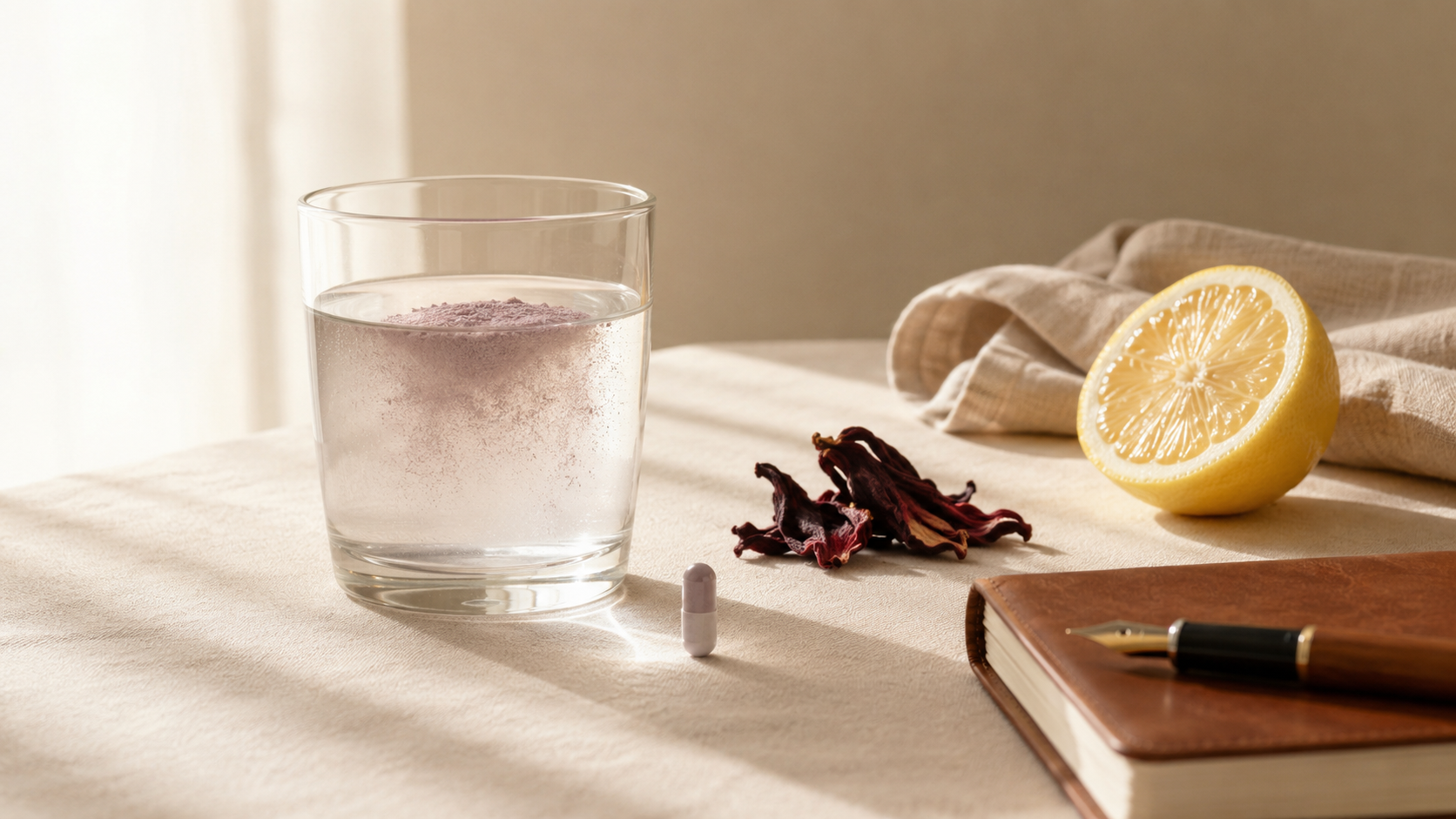
Oral, 5g daily, split into two doses — morning and evening, dissolved in room-temperature water. This is not a random supplement choice. A 2021 study in Nutrients demonstrated that L-glutamine, a conditionally essential amino acid, plays a direct role in maintaining and restoring intestinal tight junction integrity. It is, in effect, fuel for the enterocytes that line your gut wall. When those cells are stressed or permeability is elevated, glutamine depletion is commonly observed. The researchers concluded that supplementation “significantly reduced intestinal permeability markers” in human subjects with gut barrier dysfunction.
2. A 30-Day Elimination of Emulsifiers and Artificial Sweeteners
This one was harder than the supplements. I removed polysorbate-80, carboxymethylcellulose (CMC), carrageenan, sucralose, and aspartame entirely from my diet. That meant reading labels on salad dressings, nut milks, protein bars, and even supplements. Most people do not realize that these emulsifiers, which give processed foods their creamy texture and shelf stability, have been implicated in degrading the protective mucus layer that separates gut bacteria from the intestinal epithelium. The seminal 2015 study in Nature, led by Dr. Benoit Chassaing, found that mice fed emulsifiers at human-equivalent doses developed low-grade gut inflammation and metabolic dysfunction. Follow-up human studies, though smaller, have shown similar shifts in microbiota composition. I wanted to see what happened when I removed them entirely.
3. Introduction of Specific Probiotic Strains
Not all probiotics are equal. I chose Lactobacillus rhamnosus GG (LGG) and Bifidobacterium lactis BB-12, two of the most clinically studied strains. A 2020 systematic review in JAMA Dermatology associated LGG supplementation with reduced acne severity scores in two small but well-designed trials. The mechanism, researchers proposed, involves strengthening the gut barrier and reducing circulating inflammatory cytokines that show up in the skin. I took one capsule of each strain daily, refrigerated, at breakfast.
I didn’t change my skincare. I didn’t add any topical actives. I wanted to isolate the gut variable.
Week 1–2: What Nobody Tells You About the First Phase
The first four days felt like nothing. I took my glutamine. I scrutinized labels. I swallowed my probiotics. My skin looked the same. My bloating continued. I wrote in my symptom journal: “Day 4. No change. Possibly this was a bad idea.”
Then came day 5 through day 14.
My skin worsened. Not marginally — noticeably. New cystic spots appeared along the chin and left cheek. The bloating did not retreat. My brain fog, if anything, intensified. I spent day 10 at my desk with a heating pad pressed against my abdomen, deeply regretting every promise I’d made to write this article.
This is the purging phase. It is mentioned in the literature — though rarely foregrounded — and it’s almost absent from the wellness blog version of this protocol. As your gut microbiome shifts and previously dormant pathways of elimination become active, the skin can temporarily worsen. The body, suddenly receiving less inflammatory input from emulsifiers and more barrier support from glutamine, begins recalibrating. But recalibration is not gentle.
By day 14, I almost abandoned the experiment. The only thing that kept me going was a note I’d written at the start, pinned above my desk: “You promised six weeks. Give it six weeks.”
Week 3–4: The Inflection Point
Between day 15 and day 21, something quiet began to shift.
The bloating lessened. Not dramatically at first — an inch off my waist measurement, a meal that didn’t leave me reaching for the trouser button. But it was measurable. My Bristol scale readings steadied. The brain fog, which I’d tracked on a subjective 1-to-10 scale, dropped from a consistent 7 to a 4.
My skin was slower to respond. The cystic acne along my jaw did not vanish, but the new lesions stopped appearing. By day 28, I canceled a dinner I’d been looking forward to, not because I was hiding, but because I didn’t want restaurant food — with its unknown emulsifiers and sweeteners — to undo what was finally starting to happen.
That was the moment I realized the experiment was working. Not because I felt transformed. Because I felt protective of the progress.
Week 5–6: The Clearing
On day 35, I took a photograph and compared it to day 0.
The difference was not subtle. The cystic inflammation along my jawline had flattened. Hyperpigmentation remained — I was not miraculously unmarked — but the active, painful, under-the-skin lesions were gone. My face looked calmer. The redness that had bordered my nose and chin for years had receded.
On day 40, a friend I hadn’t seen in two months asked if I’d changed my make‑up. I told her I was wearing less of it.
On day 42, the experiment ended. I reintroduced one emulsifier-containing food — a commercially made salad dressing — and within 36 hours, three small spots appeared near my temple. The correlation was striking enough that I removed it again immediately. Correlation is not causation, I reminded myself. But I also wasn’t willing to run the experiment twice.
What the Science Says (And What It Doesn’t)
I want to be careful here. This was an n=1 experiment. I am one person. My results are not generalizable, and this article is not a prescription.
But my experience aligns with a growing body of research that the dermatological establishment has been slow to integrate. The gut-skin axis is not fringe theory; it’s published in major immunology and gastroenterology journals. The mechanism is biologically plausible. The human trials are often small, underpowered, or conducted primarily in Asian and European populations — but they exist, and they point in a consistent direction.
What the evidence does not support is the claim that every case of acne is gut-driven — or that a six-week protocol will work for everyone. It didn’t cure my hyperpigmentation. It didn’t erase my pores. It addressed something specific: inflammatory, hormonal-pattern acne that had resisted years of topical and dietary intervention. If your acne is mild, comedonal, or clearly triggered by a product, this protocol is unlikely to be your answer.
What I’d Do Differently
If I were starting again, I’d do three things:
- Begin with testing. A comprehensive stool analysis (like the GI-MAP) before starting would have given me a baseline: calprotectin, zonulin, secretory IgA, and microbiome diversity. I did this without data, and I don’t recommend that. Testing isn’t essential, but it transforms the experiment from blind trial to informed investigation.
- Warn people around me. The purging phase affected my mood and social availability. I should have told my partner and close friends, “I’m doing a thing, I might be irritable for two weeks, it’s not you.”
- Eliminate emulsifiers first, add supplements second. I did both simultaneously, which made it impossible to isolate which intervention contributed most. If I were designing a cleaner experiment, I’d remove emulsifiers for 30 days before adding glutamine. But life is short, and I was impatient.
The Bottom Line
Three years, countless dermatologist appointments, and more money spent on skincare than I’d care to calculate. The answer, it turned out, was not on my face. It was further down.
I still use a retinoid. I still wear sunscreen. I have not abandoned conventional dermatology. But I have added something to my understanding of my own body that no topical could provide: the recognition that my skin and my gut speak the same language, and for years, I was only listening to one side of the conversation.
If you’ve struggled similarly — and you’ve tried everything on the outside to no lasting effect — it may be worth asking what’s happening on the inside. Not with a miracle supplement, but with the patience and attention that genuine investigation requires.
Resources I Used
- L-Glutamine Powder (NOW Foods) — the exact brand and dosage used in this protocol
- Probiotics: Culturelle (LGG) and BB-12 — refrigerated, taken daily
- Comprehensive stool testing: GI-MAP (Diagnostic Solutions Laboratory) or Gut Zoomer (Vibrant Wellness) — speak with a functional medicine practitioner for interpretation
Disclosure: Some links are affiliate partnerships. On the Webb earns a small commission if you purchase, at no extra cost to you. We only recommend products we’ve genuinely tested. See our full Affiliate Disclosure.
This article is for informational purposes only and does not constitute medical advice. Consult a qualified healthcare provider before beginning any supplementation protocol.